Cardiac Stress Tests at Zwanger-Pesiri
A cardiac stress test (also referred to as a nuclear stress test or cardiopulmonary exercise test) measures the heart's ability to respond to external stress in a controlled clinical environment. The stress response is induced by exercise or by drug stimulation. This exam is used to diagnose various symptoms, including chest pain, shortness of breath, or palpitations. It helps to identify abnormal heart rhythms, to see if enough blood flows to your heart, as you get more active, see how well your heart valves are working, and to find out if it's likely that you have coronary heart disease and need more testing.
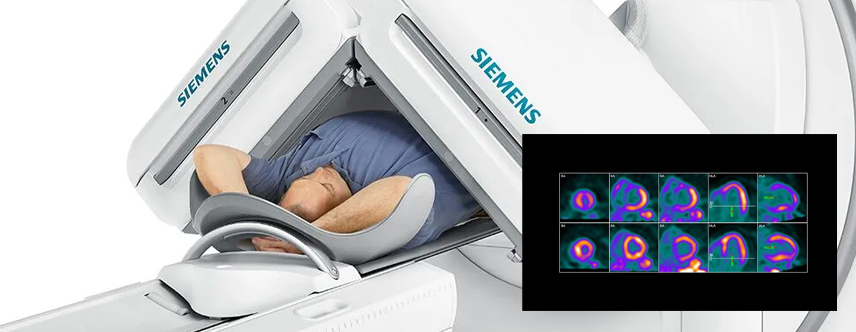
At ZP, we offer Single Photon Emission Computed Tomography (SPECT) imaging, which uses specialized cameras to visualize the internal organs at work, as well as the body's anatomy through three-dimensional images. Cardiac Stress Tests are currently being performed in our Massapequa and Smithtown East locations.
A physician may recommend a Cardiac Stress Test to:
- Diagnose coronary artery disease
- Diagnose a possible heart-related cause of symptoms such as chest pain, shortness of breath or lightheadedness
- Determine a safe level of exercise
- Check the effectiveness of procedures done to improve coronary artery circulation in patients with coronary artery disease
- Predict risk of dangerous heart-related conditions such as a heart attack.
How does a Cardiac Stress Test work and what happens
during the procedure?
Rest Portion of the Cardiac Stress Test
The cardiac stress test begins with the resting portion of the exam. A small amount of a radioactive tracer is administered through an IV, allowing specialized imaging equipment to capture detailed pictures of blood flow to the heart muscle while the patient is at rest. During this time, the patient relaxes comfortably while the tracer circulates through the bloodstream.
Once the tracer has been absorbed by the heart, the patient lies on an imaging table while a specialized camera acquires images. These resting images provide important baseline information about heart function and blood flow.
Stress Portion of the Cardiac Stress Test
The stress portion evaluates how the heart performs when working harder. Depending on the patient's condition, stress may be induced through exercise on a treadmill or by using medication that safely simulates the effects of exercise on the heart. Throughout this phase, heart rate, blood pressure, and heart rhythm are carefully monitored.
A second dose of tracer is administered during peak stress, and additional images are obtained after the stress phase is complete. The radiologist and cardiologist compare the stress and rest images to identify areas of reduced blood flow, helping detect coronary artery disease and other cardiac conditions.
Frequently Asked Questions
You should wear shoes and clothes in which you can exercise comfortably. Sometimes you’re given a gown to wear during the test.
Your doctor might ask you to fast (not eat or drink anything but water) for a short time before the test. If you're diabetic, ask your doctor whether you need to adjust your medicines on the day of the test.
For some stress tests, you can't drink coffee or other caffeinated drinks for a day before the test. Certain over-the-counter or prescription medicines also may interfere with some stress tests. Ask your doctor whether you need to avoid certain drinks or food or change how you take your medicine before the test.
If you use an inhaler for asthma or other breathing problems, bring it to the test. Make sure you let the doctor know that you use it.