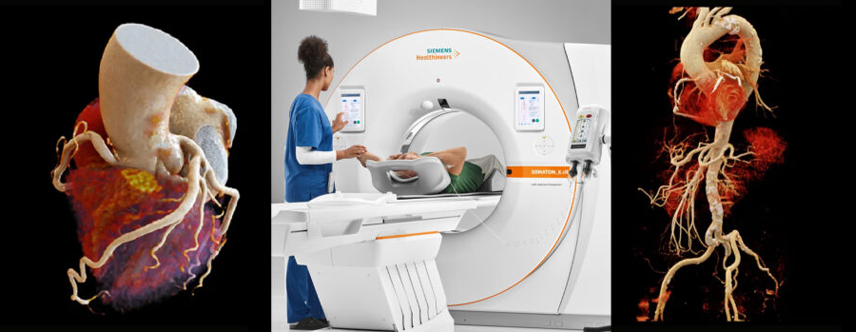
Coronary CT Angiography

Coronary CT Angiography at Zwanger-Pesiri

Coronary CT Angiography is an imaging procedure used to obtain high resolution images of the arteries that supply blood to the heart muscle. Intravenous contrast is administered to provide a high-definition evaluation of artery patency and to rule out the potential for coronary artery disease.

A CCTA is often performed along with a calcium score to enhance your cardiac evaluation by quantifying plaque buildup, helping identify early heart disease risk and guiding more precise treatment decisions.

Our specialized cardiac imaging team were early pioneers in CCTA on Long Island, and have been performing this test for decades. We are always available for any questions or concerns you may have about the procedure. Contact us today.

Coronary CT Angiography exam

What is CCTA?

A CCTA is a noninvasive test that produces detailed 3D images of the arteries in your heart to detect abnormalities in blood flow. It is used to diagnose cardiovascular disease by detecting calcium in your arteries, a sign of fatty build-up called plaque. Plaques in the arteries of your heart are the main cause of heart attacks and can block the flow of blood and the oxygen supply to your heart.

Why might I need a CCTA exam?

You may be recommended for a CCTA if you have symptoms of cardiovascular disease or if you are diagnosed and your doctor needs more information. Reasons for a CCTA may include:

  • Abnormal test results from another test such as an echocardiogram or stress test
  • Abnormal structure of your coronary arteries
  • Risk for developing coronary artery disease
  • New or worsening coronary artery disease symptoms
  • You have undergone coronary artery bypass graft (CABG) surgery
  • Certain risks associated to elevated cholesterol levels
  • Preventative analysis due to family history of coronary artery disease

Fractional Flow Reserve

Fractional Flow Reserve (FFR-CT) is a new technology that can be added to a Coronary CT Angiography (CTA) exam to provide even deeper insight into coronary artery disease. Using advanced computational analysis, FFR-CT helps determine whether a blockage is actually restricting blood flow to the heart, not just whether plaque is present. This noninvasive assessment can improve diagnostic accuracy, help guide treatment decisions, and may reduce the need for unnecessary invasive cardiac procedures.

Soft Plaque Analysis

Soft Plaque Analysis is a newly FDA-approved enhancement that can be added to a Coronary CT Angiography (CTA) exam to provide a more comprehensive assessment of coronary artery disease. Using advanced AI-powered technology, it identifies and quantifies soft, non-calcified plaque that may not be detected with traditional calcium scoring alone. This additional information helps physicians better evaluate cardiovascular risk, support earlier intervention, and develop more personalized treatment strategies—all through a noninvasive imaging exam.

Frequently Asked Questions

24 hours prior to your exam, do not have any caffeinated or decaffeinated beverages or food including, energy drinks, coffee, tea, dark chocolate or diet pills.

For men, do not take Viagra or similar medications for 3 days prior to the exam.

Continue to take all your regular medications.

On the day of the exam, do not eat 1 hour prior.

Please leave all jewelry at home. Do not apply lotion to skin prior to exam.

Please be aware that sometimes it is necessary to take a medication called a betablocker to help lower your heart rate. If this occurs, you may be at the office for 1 hour or more.

During a CCTA, our nurse or technologist will direct you to lay down on the table of the CT machine and will then place electrodes on your chest, which records your heart’s electrical signals at rest.

We will then insert an IV line containing the contrast material through your arm or hand. As the table moves through the scanner it will take several images at different angles for precise imaging. You may be asked to hold your breath and remain still, as slight body movements may impact the quality of the imaging produced by the CT machine.

In certain conditions, you may be asked to take a medication to lower your heart rate prior to the procedure. These are commonly prescribed medications, such as beta blockers.

The procedure only takes minutes. Your results will be examined by a radiologist, a physician who interprets radiology exams and will discuss the findings with your doctor or cardiologist.