Advanced Cardiovascular Imaging with MRA
Advanced MR Angiography at Zwanger-Pesiri Radiology delivers detailed, high-resolution images of blood vessels using the latest MRI technology for accurate, noninvasive vascular evaluation. Our highly skilled cardiology department works alongside experienced, board-certified radiologists to ensure precise interpretations and comprehensive cardiovascular insight. Throughout every step of the exam, our caring and attentive staff focuses on patient comfort, safety, and clear communication, creating a reassuring experience. We offer MR Angiography in both Nassau and Suffolk counties.
What is MR Angiography?
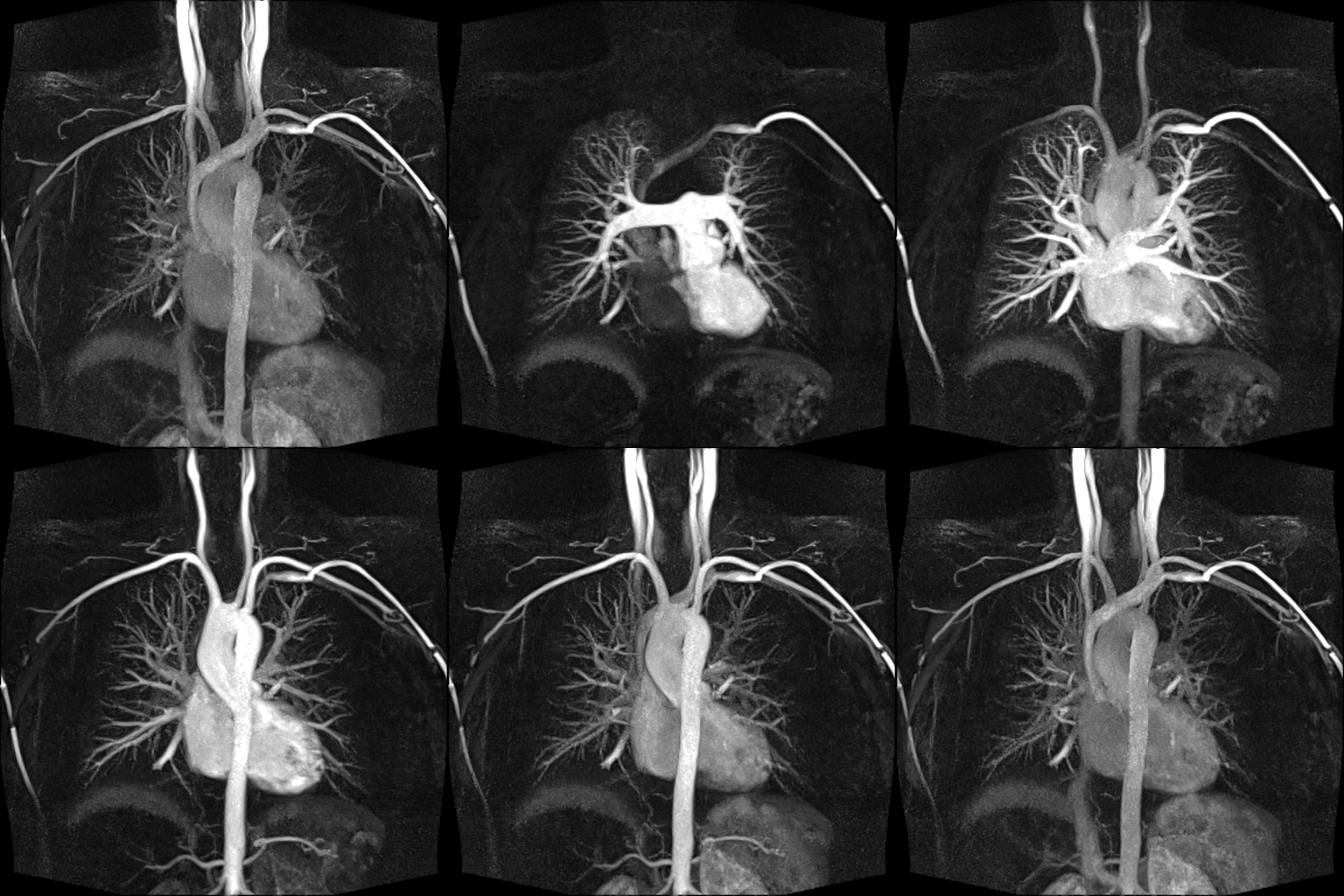
Magnetic Resonance Angiography (MRA) is a noninvasive tool that allows us to visualize your blood vessels and blood flow. An MR Angiogram may be used to diagnose conditions including atherosclerosis or blood clots. This test may be performed with a contrast dye to enhance imaging of your arterial system. MRA is an alternative to an invasive angiogram.
MRA may be performed to visualize your:
- Carotid arteries.
- Peripheral arteries.
- Pulmonary (lung) arteries.
- Renal (kidney) arteries.
- Coronary (heart) arteries.
- Arteries of your whole body if you have vasculitis or atherosclerosis.
- Aorta.

What is MRA used to diagnose?
MRA can be used to diagnose multiple conditions, including:
- Aortic dissection.
- Pulmonary embolism (blood clot in your lung).
- Aneurysm (stretched out artery wall).
- Deep vein thrombosis (DVT).
- Congenital (since birth) heart disease.
- Arteriovenous malformation.
- Artery stenosis (narrowing).
- Atherosclerosis.
Frequently Asked Questions
If you are receiving IV CONTRAST for your exam, have nothing to eat 1 hour prior to your exam time. You may drink clear liquids (example: water, ginger ale, apple juice).
Because the MRI system uses a very powerful magnet, there are many items that cannot be brought into the exam room. Although a private locker will be provided, it is best to leave certain items at home or with someone during your MRI exam, including:
- Cell phones, pagers, iPads, or any other electronic device
- Credit cards, driver’s license, and any other card with a magnetic strip
- Loose change
- Bobby pins, safety pins or any other item with metallic pieces
- Any loose metallic items on clothing or body
- Glasses, hearing aids and items such as TENS Units will not be able to go into the exam room, but can be worn until just before entering the MRI room.
- Wear comfortable loose-fitting clothes, such as a sweatsuit. Be sure there are no metal zippers, snaps or buckles. Do not wear earrings, hairpins, or jewelry. Do not apply eye shadow or mascara.
This exam may not be performed if you have a cardiac pacemaker, cerebral aneurysm clips or a metallic hearing implant. If you are a sheet metal worker or have ever had metal fragments in your eye(s), an orbit x-ray will be taken prior to your MRI exam.
After checking in, you will be escorted to a changing room. You will then meet the registered MRI technologist who will be performing your exam. The technologist will review the screening questionnaire and the procedure with you, answering any questions you may have.
When you are ready, you will be asked to lie down on the cushioned MRI table. Many MRI exams require the use of a coil, which is placed on or around the body part being scanned. The coil is a lightweight device that acts as an antenna to receive the radio frequency signal coming out of your body. That data is then transmitted to a computer, which will then generate the images. If it has been determined that your study requires the use of a contrast material (or dye), the technologist or nurse will perform the injection and administer the iodine-free contrast. Please let the staff know if you have any allergies.
The table will slowly move into position within the large doughnut-shaped magnet. We provide you with noise-canceling headphones and your choice of music, as you will hear a series of loud thumping noises as the scan is performed. With our modern MRI systems, most exams are over in 3 songs! We ask that you keep very still to help ensure that the images come out clear. Throughout the entire exam, you will be able to communicate with the technologist through an intercom.
An MR Angiogram exam can take anywhere from 10 to 30 minutes, depending on the specific type of study.