Breast Ultrasound
Breast ultrasound imaging uses sound waves to produce pictures of the internal structures of the breast. This procedure is primarily done to help diagnose breast lumps or other abnormalities your doctor may have found during a physical exam, mammogram, or breast MRI. Breast ultrasounds are safe, non-invasive, and do not use any radiation. This test is often administered when a change has been seen on a mammogram or when a change is felt but does not show up on a mammogram.
Breast ultrasound is not used as a primary screening tool for breast cancer, as it may miss some early signs of the disease. Certain early changes in breast tissue may not be visible on ultrasound, so additional imaging methods or diagnostic procedures are often needed to make an accurate diagnosis.
Why might I need a Breast Ultrasound?
- You have particularly dense breast tissue.
- A mammogram may not be able to see through this tissue.
- You are pregnant. Ultrasound does not use any radiation, making it safer for the fetus.
- You are younger than age 25.
- Your healthcare provider wants to look at nearby lymph nodes.
- Your healthcare provider needs to use ultrasound to guide a needle during a biopsy.
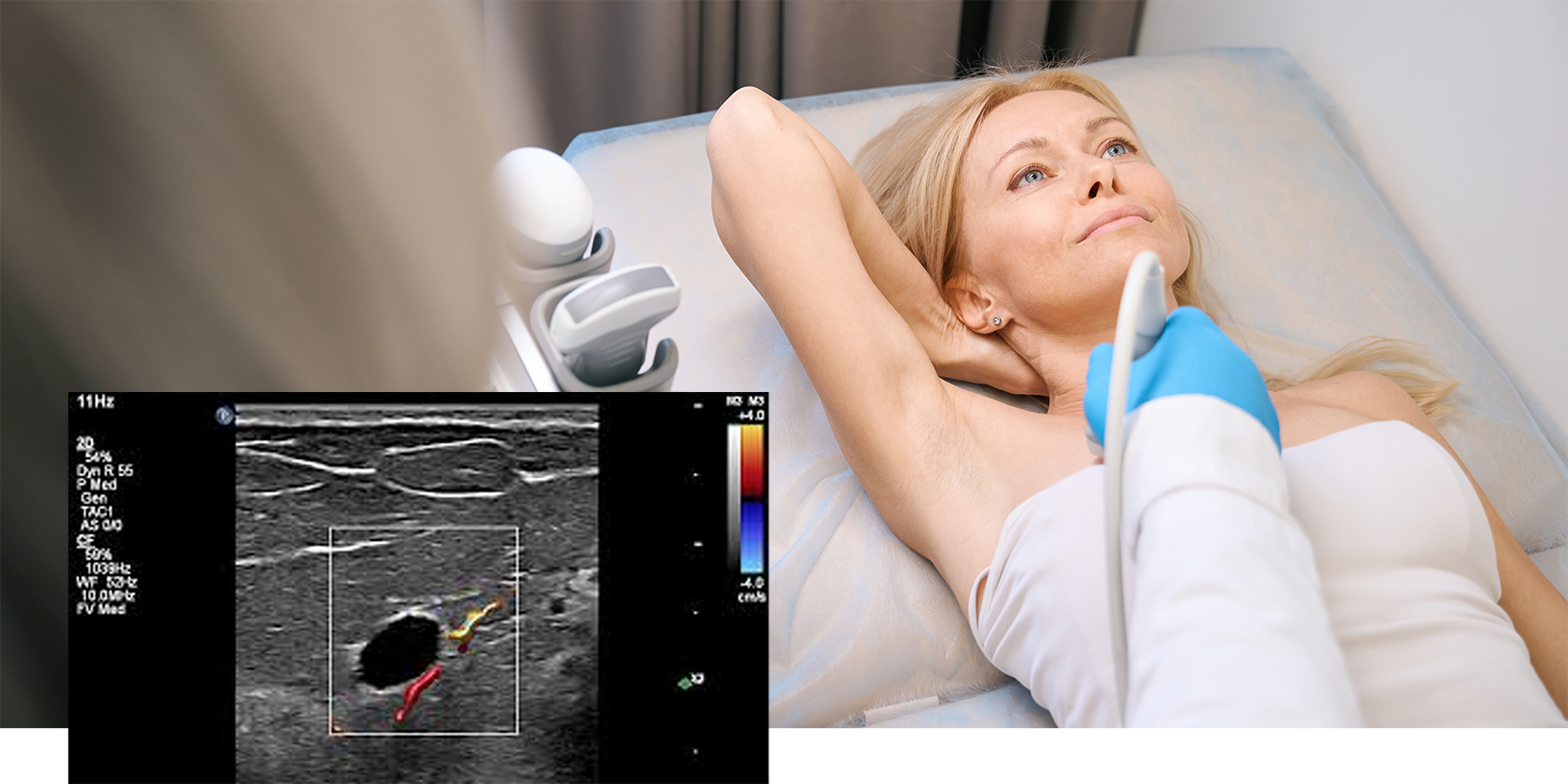
How does Breast Ultrasound work?
Women's Imaging Radiologists
Board Certified, Fellowship Trained
Different Types of Nuclear Medicine Exams and What They Evaluate
If you’re scheduled for a nuclear medicine exam, it’s important to understand what the test…

Different Types of Biopsy and When to Get One
If you have been experiencing any unusual symptoms, it is important to see a doctor…

Different Types of Ultrasound Exams and What They Evaluate
Ultrasound exams are a common diagnostic tool used by doctors to look at the inside…

Musculoskeletal Pain
If you are experiencing musculoskeletal pain, you are not alone. Many people suffer from this…

May: American Stroke Awareness Month
Strokes are an unfortunately common medical emergency that can cause long-term impairment and even death.…
Why Choose Zwanger-Pesiri?
Zwanger-Pesiri Radiology brings world-class expertise to the Long Island community. Our subspecialty-trained radiologists are Board Certified by the American Board of Radiology with fellowship training in a variety of specialties. They are highly-skilled, highly-knowledgeable, and make patient care a priority. To learn more, contact us today.