Fractional Flow Reserve
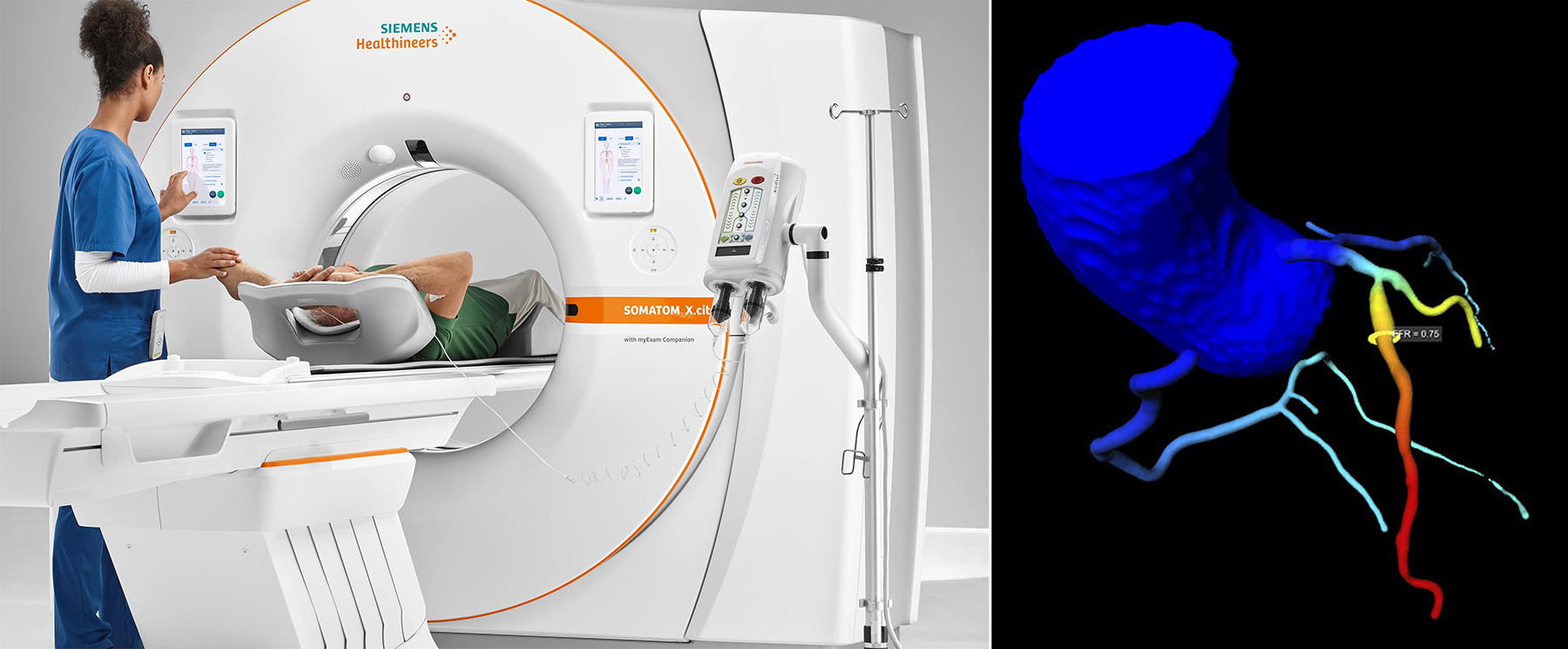
Zwanger- Pesiri Radiology offers Fractional Flow Reserve–CT (FFR-CT), a noninvasive, personalized cardiac test used to help diagnose coronary artery disease (CAD). By combining advanced CT imaging with FFR-CT technology, your doctor can accurately identify blockages in your coronary arteries and better assess your risk for a heart attack. This test is completely noninvasive and is performed at the same time as a Coronary CT Angiogram, requiring no additional procedures.
ZP is one of the first radiological practices in the area to offer FFR. Contact our Cardiovascular Imaging team if you have any questions about the procedure.
How does Fractional Flow Reserve work?
Using results from your CT scan, FFR creates a personalized, digital 3D model of your coronary arteries, and provides blood flow information. This information was previously only available through an invasive procedure. With trained specialists and powerful computer algorithms, FFR calculates how much coronary artery blockages limit your blood flow. Once the FFR analysis is complete, the results are sent to your physician.
Why might I need a Fractional Flow Reserve test?
Your doctor may order a Coronary CT scan to determine whether blockages are present in the blood vessels that supply blood to your heart muscle. This test creates detailed 3D images of the coronary arteries, allowing physicians to closely evaluate blood flow to the heart. Those who are at increased risk for coronary artery disease—such as those with a family history of heart disease—may benefit from a Coronary CT scan. Compared to invasive cardiac catheterization, a Coronary CT scan is faster, noninvasive, and carries a lower risk.
Sometimes, the CT scan provides enough information to determine the next step of your treatment plan. Other times, more information is needed. If more information is needed, you may be a candidate for FFR. Without requiring any additional appointments, this advanced technology helps identify which blockages are limiting blood flow to your heart.
What are the benefits of FFR?
- Improved Decision-Making: FFR-CT helps doctors understand whether coronary artery blockages are affecting blood flow enough to require treatment, guiding decisions between procedures and conservative medical therapy.
- Non-Invasive Assessment: Integrating FFR with CTA provides a non-invasive method to evaluate coronary artery function, reducing the need for more invasive procedures like catheter-based FFR or coronary angiography.
- Enhanced Diagnostic Accuracy: FFR-CT improves the diagnostic accuracy of coronary CTA by identifying whether a coronary lesion is hemodynamically significant, reducing unnecessary treatments and improving patient outcomes.
- Cost-Effective: By avoiding unnecessary invasive procedures and interventions, FFR-CT can potentially reduce healthcare costs associated with unnecessary stent placements or surgeries.
- Better Risk Stratification: FFR-CT allows for more precise risk assessment, helping to stratify patients more effectively based on the severity of coronary artery disease and the likelihood of adverse cardiovascular events.
- Reduction in Unnecessary Procedures: FFR-CT can help identify patients who do not require invasive procedures, thus reducing the risk of complications associated with unnecessary interventions.
- Personalized Treatment Plans: FFR-CT allows for a tailored approach to treatment, ensuring that interventions like stenting or bypass surgery are reserved for patients with significant ischemia, leading to better patient-specific outcomes.
Read more about Coronary CT Angiography, and what to expect during the procedure.

Is a 3D Mammogram Better Than a Regular Mammogram?
A 3D mammogram, also known as breast tomosynthesis, is an imaging test that creates a…

What Does Bone Densitometry Measure?
A bone densitometry test or a DEXA scan measures a person’s bone mineral density and…

Is a Breast MRI Better Than a Mammogram?
A breast MRI, or magnetic resonance imaging of the breast, is a method of testing…

Men’s Health: Preventing a Heart Attack
Did you know that heart disease is the number one killer of men in the…
Why Choose Zwanger-Pesiri?
Zwanger-Pesiri Radiology brings world-class expertise to the Long Island community. Our subspecialty-trained radiologists are Board Certified by the American Board of Radiology with fellowship training in a variety of specialties. They are highly-skilled, highly-knowledgeable, and make patient care a priority. To learn more, contact us today.