
Breast MRI
Breast MRI
Long Island's specialists in Breast MRI Screening
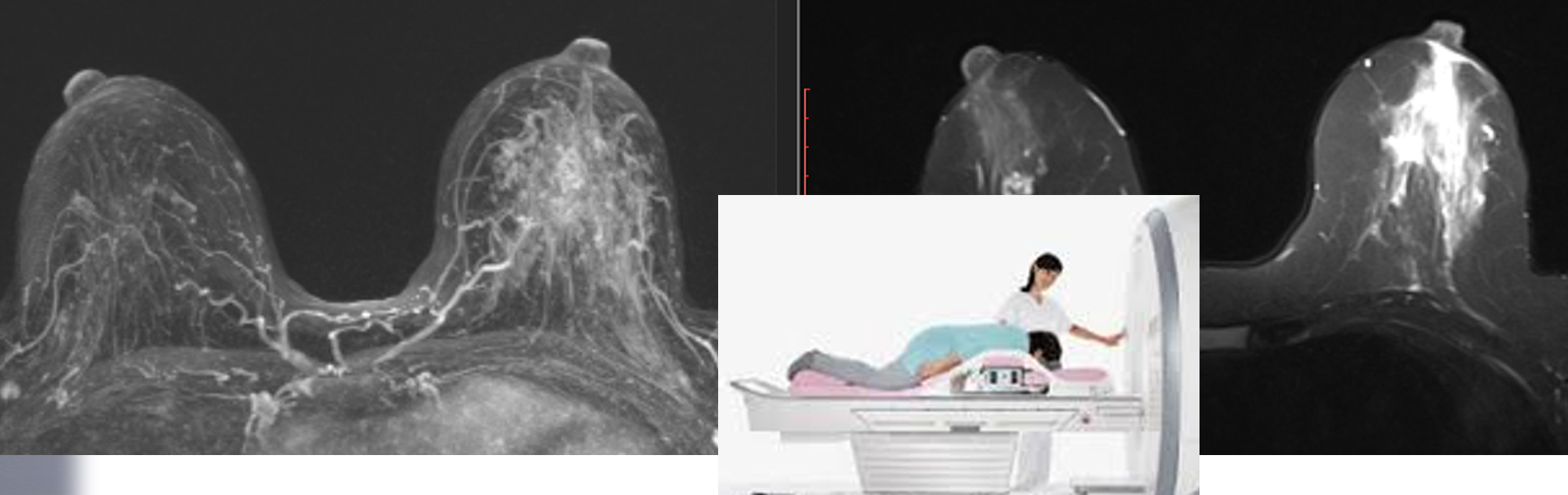
Breast MRI is a valuable tool for screening women who are at higher risk for breast cancer. It is also used in the diagnosis and staging of breast cancer and can help detect cancers that are difficult to find with other imaging methods.
MRI does not use ionizing radiation. Instead, it used magnetism and radio waves to produce remarkably clear images of breast tissue. Our Women’s Imaging team at Zwanger-Pesiri has decades of experience with breast MRI and are early pioneers in this technique. Our cutting-edge MRI systems provide the clearest, most detailed images for our Breast Imaging experts to make a diagnosis.
Who can benefit from a Breast MRI?
A breast MRI is used in conjunction with other imaging studies, such as mammography and breast ultrasound, to provide a more detailed evaluation of breast tissue. It is performed to assess the extent of breast cancer and to screen for breast cancer in women who are considered to be at high risk for the disease.
Your health care provider may recommend a breast MRI if:
- You have been diagnosed with breast cancer, and your physician needs to determine the extent of the cancer.
- You're at a high risk for breast cancer, defined as a lifetime risk of 20% or greater. This is calculated by risk assessment tools that account for your family history and other risk factors.
- You have a strong family history of breast cancer.
- You have dense breast tissue and mammograms didn't detect a prior breast cancer.
- You have a suspected leak or rupture of a breast implant.
- You have a history of precancerous breast abnormalities.
- You have a hereditary breast cancer gene change, such as BRCA1 or BRCA2.
- You had radiation treatments to your chest area before age 30.
How is Breast MRI performed?
During a Breast MRI exam, a dye (contrast agent) may be injected through an intravenous (IV) line in your arm to enhance the tissues or blood vessels on the MRI pictures. You will lie face down on a comfortable, padded scanning table. Your breasts fit into cushioned openings in the table, which contains coils that detect magnetic signals from the MRI machine. The table then slowly slides into the opening of the MRI machine. The images are then recorded on a computer.
During the test, the technologist monitors you from another room. You can speak to the technologist through a microphone. You'll be instructed to breathe normally but to lie as still as possible. The test usually takes about 30 minutes.
Women's Imaging Radiologists
Board Certified, Fellowship Trained

The Importance of Health Awareness
At any age, it is important to your well-being that you keep a close eye…

Ways to Stay Fit: How to Get Moving Again
Have you been feeling sluggish lately? Feeling like you need to get moving again but…

Aging and Athletics
As you age, it can be hard to maintain your athleticism. As the years go…

Health Screenings by Age for Women
Growing older means keeping a close eye on your health — that means frequent screenings…

Health Screenings by Age for Men
Most men are not experts when it comes to knowing which tests and screenings you…
Why Choose Zwanger-Pesiri?
Zwanger-Pesiri Radiology brings world-class expertise to the Long Island community. Our subspecialty-trained radiologists are Board Certified by the American Board of Radiology with fellowship training in a variety of specialties. They are highly-skilled, highly-knowledgeable, and make patient care a priority. To learn more, contact us today.